Cart
0
Estimated delivery: 3-5 Days
 Get Support, Call us at
96878 07999
Get Support, Call us at
96878 07999
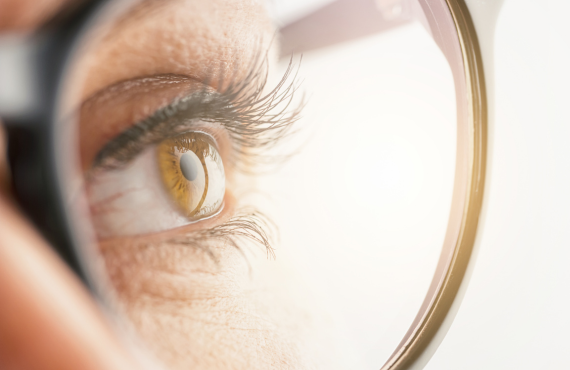
Do you know what perfect eye vision is? Well, before this, you must understand the difference between eyesight, visual acuity, and vision. Because only then will you understand the vision measurements like 6/6 or 20/20 vision.
Eyesight is a generic term used to refer to vision or the viewing ability of the eye.
Vision or Sight is one of the five basic human senses. It refers to the act or power of sensing with the eyes. Thus, vision is the manner in which an individual sees or visually perceives something.
Both these terms describe the ability of the eyes to sense but they do not quantify the ability.
Visual acuity is the term used to quantify the ability of the eyes to see i.e. eyesight or vision.
As such the concept of perfect vision may not be scientifically correct. The Visual Acuity is tested on a standardized eye chart, at a standard distance in a testing room, or under recommended dimension and lighting conditions. Hence, we compare the visual acuity in each eye with a standard that has been arrived at with some scientific and mathematical assumptions. Hence, the concept is more of a minimum standard measure of vision rather than what is perfect or normal vision. This standard visual acuity of 6/6 or 20/20 is interchangeably referred to as "normal" or "perfect" vision. However, a person can have better than 6/6 (20/20) vision in one or both eyes.
It is important to note that 20/20 or 6/6 is considered perfect vision only in terms of sharpness at a distance. A comprehensive visual acuity test also evaluates other aspects such as peripheral vision, depth perception, color vision, and eye coordination — all of which play a role in your overall quality of life and daily activities.
We discussed that It is found that light rays traveling from a distance of 6 meters are almost parallel. When we look at an object that is 6 meters away, our eyes' internal focusing mechanism, known as accommodation, is generally found to be at rest. Hence, it is ideal to check the visual acuity of the eye without the internal focussing of the eye interfering with the measurement.
The expression 6/6 is made of two numbers. The numerator (the number before the " / ") refers to the distance at which the visual acuity is being tested. " 6/6 " means that the eye can resolve or see an object (a letter) of a size meant to be seen by standard visual acuity, at a distance of six meters from a distance of six meters.
If the vision is less than standard vision, it could be 6/9 i.e. the eye can resolve letters meant to be seen at 9 meters only when they are placed at 6 meters. If the vision is better than 6/6, it could be 6/5, then it means the eye can resolve objects (letters) meant to be resolved at 5 meters even if they are moved further away at 6 meters. Hence, the denominator (the number after the " / ") refers to the smallest object that the eye can resolve.
Effectively, 20/20 is the same as 6/6. It is only a difference in the different systems of measurement followed in different countries. While most countries use the metric system in which distance is measured in meters, other countries like the US follow the imperial system of measurement in which the distance is measured in feet. Six meters is approximately 20 feet (19 ft 8.2 inches to be precise). Hence, in countries following the imperial system, standard visual acuity is expressed as 20/20.
In simple terms, perfect vision is commonly referred to as 20/20 vision, which means a person can read letters on a Snellen eye chart at a distance of 20 feet that an average person with normal eyesight should be able to read at that same distance. This is considered perfect vision for everyday purposes, though some individuals can achieve even sharper vision like 20/15 or 20/10.
Visual acuity is a quantitative measure of the eye's ability to see. It helps determine the standard vision for human beings or what may be called "normal" vision. Anything less than the "normal" value determined may need clinical investigation and corrective measures.
It also helps to compare the improvement in eyesight over time if a person is undergoing any treatment or vision therapy or the deterioration in eyesight with age, due to some disease, etc. Regular vision tests are essential for detecting refractive errors early and managing them effectively to preserve eye health.
Visual Acuity is most commonly measured using a Snellen's Chart. Snellen's is the most popular eye chart that is easily identifiable. It has a single largest letter on the top. This is followed by a row of two to three slightly smaller letters, followed by rows of smaller but more number of letters.
Typically a Snellen's chart begins with a single letter that an eye with standard visual acuity should be able to read at 60 meters. This is followed by a row of two letters of a size that an eye with standard visual acuity should be able to read at 36 meters. This is followed progressively with rows with numerous letters of sizes that an eye with standard visual acuity should be able to resolve at 24, 18, 12. 9, and 6 meters.
Most charts also have lines with smaller letters that should be readable at 5 and 4 meters. This eye chart is presented for a test at a distance of 6 meters from the eye. This is a standard distance at which visual acuity is checked normally. One eye is checked at a time. More elaborate charts have additional lines with letters that should be readable at 48 meters and 7.5 meters.
The smallest line you can read letters on determines your visual acuity score. For instance, if the smallest line you can read is the 6/6 line, your vision is considered standard. If you can only read the 6/9 or 6/12 line, your eye doctor may recommend corrective lenses or further evaluation.
In technical terms, Visual Acuity is defined as the resolving power of the eye. It is the ability to see two separate objects as separate. It may be thought of as the ability to see a gap.
There is an interesting history of how this measure was arrived at. The early astronomers found that it was possible to see two stars as separate if the distance between the stars subtended an angle of at least 1 minute of an arc (you may want to brush up on your geometry to understand this). Hence, the "normal" resolving power of the eye was defined as the ability of the eye to detect a gap with a width of 1 minute of an arc.
However, one minute of an arc is not the limit to human vision. Some eyes can resolve less than that as well and can have better than "normal" vision as well.
At the same time, some people with slightly lesser resolving ability than 1 arc of a minute may still be fine for all practical purposes. Hence, calling this "normal" vision would be misleading. We should refer to this as "standard vision".
Understanding what each vision measurement means — and how much power it corresponds to — is one of the most common questions people have after a vision test. Here's a breakdown of the most frequently asked-about readings:
6/6 vision means that you can see the objects clearly from 6 meters away. It is considered to be the normal or standard vision. Most people with 6/6 vision do not require glasses for distance viewing. In terms of eye power, 6/6 typically corresponds to zero refractive error (0.00 dioptre).
6/9 Vision means that you see the objects from a distance of 6 meters, which an average person generally sees from 9 meters. Moreover, it indicates that your vision is slightly below normal vision.
6/9 vision means how much power? A 6/9 vision usually corresponds to approximately -0.50 to -0.75 dioptre of refractive error. Whether it is myopia (near sightedness) or hyperopia (far sightedness), this mild refractive error can usually be corrected with prescription eyeglasses.
Is 6/9 vision bad? No, 6/9 vision is not considered bad. It is a mild reduction from standard vision. Many people with 6/9 vision can manage daily activities without glasses. However, if you experience difficulty while driving, reading signboards from far distances, or during focused tasks, wearing corrective lenses can provide better vision and reduce eye fatigue.
Does 6/9 vision require glasses? It depends on your daily activities and comfort. While 6/9 vision is considered legally acceptable for driving in many regions, an eye doctor may recommend glasses if you feel strain or if it affects your quality of life.
Having a 6/12 vision means that you can read the letters from 6 meters away while the normal person can read it from 12 meters away.
6/12 vision means how much power? A 6/12 reading typically corresponds to about -0.75 to -1.00 dioptre of refractive error. At this level, most people notice some blur when viewing distant objects and wearing glasses is generally recommended.
6/18 vision means how much power? A 6/18 reading indicates a more noticeable refractive error — usually around -1.50 to -2.00 dioptre. People with 6/18 vision often have difficulty reading text on screens from a distance or seeing objects clearly beyond a few meters.
Is 6/18 vision bad? While 6/18 is not severely impaired, it does indicate a significant reduction from normal eyesight. Wearingb prescription eyeglasses or contact lenses is strongly recommended for clear vision and comfort in daily activities.
Does 6/18 vision require glasses? Yes, in most cases. 6/18 vision falls below the standard required for tasks such as driving without corrective lenses. An eye doctor will typically prescribe glasses to help you achieve better vision.
6/5 vision means the eye can resolve objects meant to be seen at 5 meters even when placed at 6 meters away. This is considered better than average vision. People with healthy eyes and good eye health — particularly younger individuals — may naturally have 6/5 or even 6/4 visual acuity.
6/36 vision means you can see at 6 meters what a person with standard vision can see from 36 meters. This is a significant reduction and may indicate high refractive errors or underlying eye conditions. A person with 6/36 vision needs glasses or contact lenses, and in some countries, 6/60 or worse is considered legally blind. If your vision is 6/36 or lower, consult an eye doctor promptly for a detailed assessment.
6/60 means a person can only see at 6 meters what a standard eye sees at 60 meters. In many countries, a person with 6/60 vision or worse in the better eye, even with corrective lenses, is considered legally blind. This level of vision significantly impacts daily lives and typically requires urgent clinical intervention.
There are various types of vision problems that can prevent you from carrying out even the simplest of daily tasks properly. These problems, also called refractive errors, may arise due to any structural irregularities in the eyes. These irregularities can affect your image perception. Let's go through a few of the most common types of vision problems: -
Myopia is also known as near sightedness or short-sightedness. It occurs when the light enters the eye, after refracting through the cornea, lens and the media inside the eye forms an image in front of the retina. In other words, the natural focusing power of the eye is higher in proportion to the length of the eyeball. This may occur if a person has an elongated eyeball. In addition, a person who has myopia may have a more curved cornea. In this condition, the person cannot see distant objects properly. Moreover, it can be treated by wearing prescription eyeglasses, contact lenses of minus power, or through refractive surgery options such as LASIK.
Opposite to Myopia, Hyperopia occurs when the light enters the eye, after refracting through the cornea, crystalline lens and the media inside the eye forms an image behind the retina. In other words, the natural focusing power of the eye is lesser in proportion to the length of the eyeball or the length of the eyeball is shorter in proportion to the focusing power of the eye. A hyperopic eye may have a short eyeball. Apart from this, a less curved cornea can also lead to this problem.
In this condition, the person faces difficulty seeing the nearby objects and close objects clearly. In a lot of cases, the vision may be clear, but it takes additional effort on part of the internal muscles of the eye to increase the thickness of the crystalline lens inside the eye, a phenomenon known as accommodation, to enable clear vision. The additional accommodation causes eye fatigue. It can be corrected by wearing corrective contact lenses or eyeglasses with plus power to improve vision. Refractive surgery such as LASIK or PRK may also be an option for good candidates.
Astigmatism refers to vision defects that need cylindrical powered spectacles and contact lenses (toric contact lenses) to correct vision defects. In this condition, light traveling through the cornea, crystalline lens, and media of the eye does not form a point image on the retina as is expected. The image of a point object is elongated or spread. A person with very less astigmatic power may feel the vision is better by squeezing the eyelids and making the eyes smaller. While it is common to find this vision defect in lesser powers associated with a modern active lifestyle, high amounts of astigmatism is generally associated with irregular curvature of the cornea.
Spectacles, rigid gas permeable contact lenses, and soft toric contact lenses are easy and a great way to manage this vision defect. People with high astigmatism who are not good candidates for LASIK may consider ICL (Implantable Collamer Lens) surgery as an alternative vision correction option.
Conditions like myopia, hyperopia, farsightedness and astigmatism together make up the most common refractive errors affecting people across all age groups.
Presbyopia refers to a decline in visual capacity by age. It occurs when the eye's lens starts losing its flexibility as age increases, making it difficult to change focus from far distances to close objects. It can also result in ineffective light bending. In addition, this can cause various types of vision problems by making it difficult to focus properly.
Multifocal, bifocal, or progressive lenses are recommended to treat presbyopia. You can also consider reading glasses for close-up tasks. Moreover, you must ensure that you are purchasing your lenses from a reliable optician like R. Kumar Opticians to get the best quality. For more information, you can get in touch with us.
Beyond refractive errors, several factors can impact your eye health and quality of life over time. Conditions like dry eye syndrome, macular degeneration, and cataracts are more common with age. Wearing protective eyewear such as sunglasses with UV protection and blue light filter glasses can help safeguard your eyes in daily lives. A diet rich in antioxidants, vitamins, and minerals — combined with a healthy lifestyle — is also essential for maintaining healthy eyesight and reducing the risk of age-related vision loss.
Yes, it is possible to have sharper vision than 20/20. People with healthy eyes can identify a few letters on the 20/15 line or the smallest line of even smaller letters on the standardized eye chart. Having better than 20/20 vision means identifying the numbers or alphabets that are smaller than the numbers or letters on the 20/20 vision line of the Snellen chart. Refractive surgery such as LASIK can sometimes result in better vision — some patients achieve 20/15 or even 20/10 after the procedure.
Maintaining healthy eyesight requires a combination of good habits and preventive care. Here are some practical tips for better vision throughout your life:
Get regular vision tests: Schedule a comprehensive vision test at least once a year, especially if you wear glasses or contact lenses. Early detection of refractive errors and other conditions is key to preserving good eyesight.
Follow the 20-20-20 rule: When working on screens, every 20 minutes, look at something 20 feet away for 20 seconds. This helps reduce eye fatigue and supports long-term eye health.
Wear the right eyewear: Use prescription eyeglasses or contact lenses as recommended. For screen use, consider computer glasses with blue light protection. When outdoors, wear sunglasses with UV protection as protective eyewear.
Eat for your eyes: A healthy lifestyle that includes leafy greens, fish, nuts, and citrus fruits provides the vitamins and antioxidants your eyes need.
Limit screen time in early childhood: Children's eyes are still developing during early childhood, and excessive screen exposure can contribute to myopia progression. Encourage outdoor activities and limit device use.
Know the warning signs: Blurry vision, frequent headaches, difficulty seeing at far distances, and eye strain are signs you should schedule a vision test promptly.
Hence, we hope that after going through this blog, you can understand what is perfect eye vision, visual acuity and what is the purpose behind measuring visual acuity. We also explained what different vision measurements like 6/6, 6/9, 6/12, 6/18, and 6/36 mean in terms of eye power and whether they require glasses. Apart from this, we also discussed different types of vision problems including common refractive errors to give you a detailed idea about the topic. If you are experiencing any vision issues, visit R. Kumar Opticians for a professional vision test and personalised vision correction solutions.
A -6.5 refers to the quantum or measure of the refractive error or the correction required by the eye to achieve standard vision or normal eyesight. It is not the measure of eyesight or vision per se. Having a -6.5 refractive error means that the person is suffering from the condition known as myopia. At this level, glasses or contact lenses are essential for clear vision, and the person may also be a candidate for refractive surgery such as LASIK or ICL to achieve better vision.
Generally, the refractive error or spectacle power i.e. the correction required in spectacles to correct vision defect is measured in steps of 0.25. This may be considered as the lowest eye power. However, at R. Kumar, we are already trying more precise and accurate measurement and vision correction as low as 0.01 D (D = dioptre. Dioptre is the unit used to measure the refractive error)
You can book an appointment for a comprehensive vision test to know what your eye power is. Also, if you are experiencing any symptoms like blurry vision, eye pain, etc., you must get your eyes checked. You can also get in touch with R. Kumar Opticians for your vision test and get the reading glasses or contact lenses according to your vision strength or prescription.
A visual acuity of 2.0 (equivalent to 20/10 or 6/3) means your eyesight is twice as sharp as the standard 20/20 vision. While 20/20 is considered perfect vision by most standards, 2.0 is actually better than what is typically classified as normal eyesight. This level of visual acuity is rare but possible in people with exceptionally healthy eyes.
The normal eye power for both the left and right eye is 0.00 dioptre, which corresponds to 6/6 or 20/20 vision. However, it is common for most people to have slightly different prescriptions in each eye. A mild power of up to +/-0.25 to +/-0.50 in one eye is generally not a cause for concern, though regular vision tests help monitor any changes over time.
The normal range of eye power — where most people function well without glasses — is generally between -0.25 and +0.50 dioptre. Beyond this range, refractive errors like myopia, hyperopia, or astigmatism typically require vision correction through glasses, contact lenses, or in some cases, eye surgery to achieve clear vision.


Selling Out Fast


Sunglasses do more than complete your look—they protect against UV damage, eye strain, and early aging. Discover the eye health benefits of wearing sunglasses.

With the sun's harmful UV rays threatening their delicate eyes, prescription sunglasses for children are an excellent solution. This blog will explore the advantages of prescription sunglasses for children.

Understanding your eyeglass prescription is key to maintaining good eye health. This guide explains how to read your prescription and what the different terms signify.
New Glasses could mean any of the following scenarios: You have been prescribed spectacles for the first time, and you...